In today’s global logistics and supply chain environment, standard shipping containers have long been the backbone of cargo transportation. However, with the increasing complexity of modern trade, diverse product types, and specialized storage needs, standard containers often cannot fully satisfy all requirements. This is wherecustomized containers come into play. Designed to meet specific transportation, storage, and operational challenges, customized containers provide businesses with flexibility, efficiency, and enhanced safety.
1. The Need for Customization
While standard containers are versatile, many industries face unique requirements that standard dimensions, load capacities, or features cannot address:
Specialized cargo dimensions: Oversized machinery, long equipment, or unusually shaped goods may not fit in standard 20- or 40-foot containers.
Temperature-sensitive products: Perishable foods, pharmaceuticals, and chemicals often require strict temperature control beyond what typical refrigerated containers can offer.
Hazardous materials: Flammable, toxic, or corrosive goods need containers designed with safety features to meet regulatory standards.
Secure or high-value items: High-security locks, reinforced structures, or monitoring systems are necessary for transporting valuable cargo.
Customized containers are engineered to tackle these challenges, ensuring products arrive safely and meet industry-specific compliance standards.
2. Types of Customized Containers
Customized containers can be adapted in numerous ways depending on the industry and cargo requirements. Common variations include:
a. Size and Structural Modifications
Extended or shortened lengths for oversized or compact goods.
Reinforced flooring and walls to carry heavy or high-density cargo.
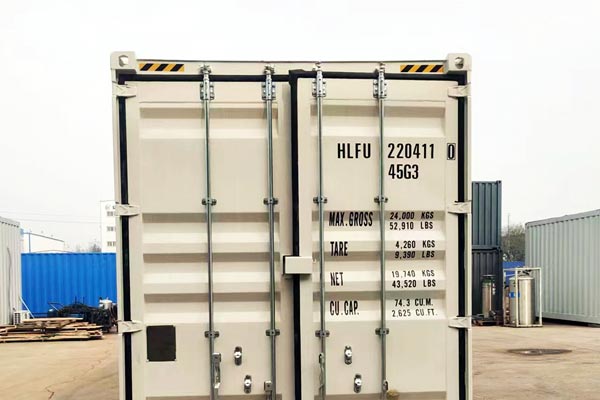
Special door arrangements or side openings for easier loading and unloading of bulky items.
b. Temperature-Controlled Containers
Enhanced refrigeration units with adjustable temperature ranges for pharmaceuticals, seafood, or frozen foods.
Humidity and ventilation control to maintain product quality during long-distance transport.
c. Hazardous Material Containers
Explosion-proof or fire-resistant structures for flammable goods.
Corrosion-resistant coatings for chemicals or sensitive materials.
Compliance with international safety regulations, including IMDG (International Maritime Dangerous Goods) codes.
d. Security-Enhanced Containers
Reinforced locking mechanisms and tamper-proof designs for high-value items.
Integrated GPS tracking and sensor systems for real-time monitoring of location, temperature, and container integrity.
e. Modular and Multi-Purpose Designs
Containers withremovable partitions, adjustable shelving, or multi-level racks for mixed cargo types.
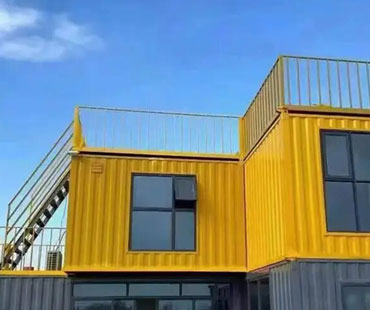
Flexibility to convert containers for storage, office, or mobile workshop use, in addition to transportation.
3. Benefits of Customized Containers
Investing in customized containers provides several tangible advantages:
a. Maximized Safety and Compliance
Custom designs ensure cargo protection and compliance with transportation regulations.
Reduced risk of damage, spillage, or contamination, safeguarding both goods and personnel.
b. Improved Efficiency
Tailored loading and unloading configurations save time at ports and warehouses.
Optimized space utilization reduces the number of containers required, lowering shipping costs.
c. Versatility and Adaptability
Businesses can transport unique or specialized goods without relying on multiple container types.
Modular designs allow containers to adapt to different cargo types over time, extending their service life.
d. Competitive Advantage
By ensuring goods arrive safely and efficiently, companies enhance their reliability and reputation with clients.
Faster delivery and lower damage rates contribute to customer satisfaction and operational excellence.
4. Applications Across Industries
Customized containers find applications in a wide range of sectors:
Manufacturing and Heavy Machinery: Oversized equipment and parts require structural modifications for safe transport.
Food and Pharmaceuticals: Temperature- and humidity-controlled containers preserve perishable and sensitive products.
Chemical and Hazardous Goods: Specialized containers ensure compliance with safety and environmental regulations.
E-commerce and High-Value Goods: Security-enhanced containers protect high-demand products during transit.
Events and Mobile Solutions: Modular containers can serve as mobile offices, pop-up shops, or temporary storage solutions.
5. Design and Implementation Considerations
Creating a customized container involves a careful assessment of needs:
1.Cargo Analysis: Understanding dimensions, weight, sensitivity, and regulatory requirements.
2.Environmental Factors: Accounting for temperature extremes, humidity, and handling conditions.
3.Material Selection: Choosing the right steel, aluminum, or composite material for durability, corrosion resistance, and weight.
4.Cost and ROI: Balancing customization investment against efficiency gains, reduced losses, and operational benefits.
Collaboration with experienced container manufacturers ensures the final product meets both operational and safety standards while maximizing logistical efficiency.
Customized containers represent a significant evolution in cargo transportation and storage solutions. By tailoring size, structure, temperature control, security features, and modular capabilities, businesses can address unique logistical challenges that standard containers cannot.
For industries dealing with specialized, high-value, or sensitive goods, customized containers enhance safety, efficiency, and reliability, enabling companies to maintain competitiveness in an increasingly complex global market. Whether it’s safeguarding perishable goods, transporting oversized machinery, or providing secure storage solutions, customized containers are a versatile and strategic investment that meets the evolving needs of modern logistics.